Introduction#
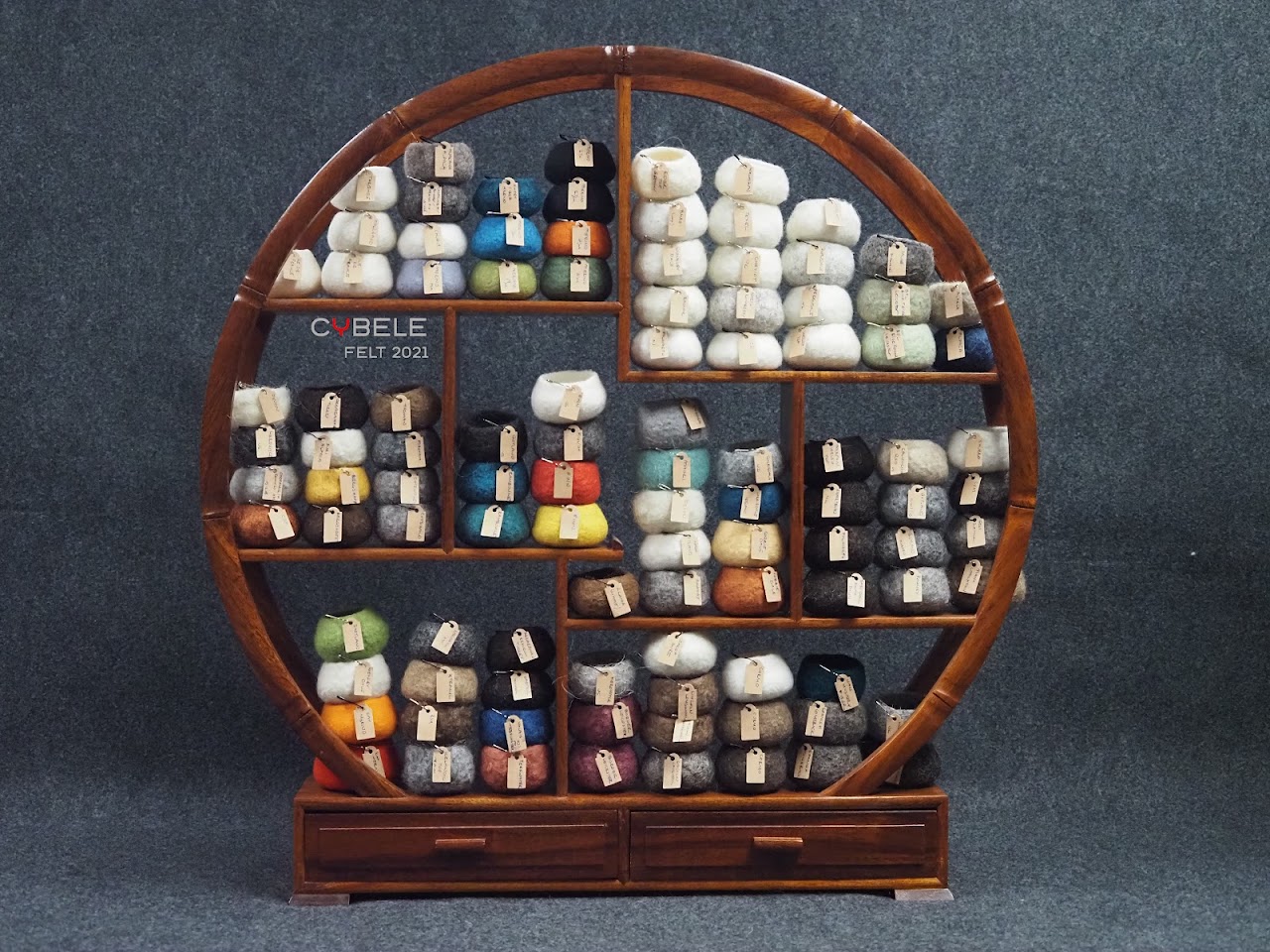
I started experimenting with different breeds of sheep during the Covid-19 pandemic. In the middle of amazing uncertainty that came with the pandemic, I wanted to have little projects that I can achieve every night. So I started making tiny felted vessels from the wool I had at hand. The objective was to produce small collections of similar sized vessels that I would display like a little insect collection, like in a curiosity shop. I would fix one thing and try all sort of variations on the theme. I had different colors, different shapes, different ways to add handles, different cellulose fibers, different fabrics. The vessels were each tiny, 4.5 grams each and ended up about couple of inches wide.
I tried different breeds of sheep as part of this project. After I completed all the different breeds I had at hand, I bought a sampler pack online. Then I asked friends and my guild for what breeds they had at hand. The project grew and grew, and become a bit of an obsession. I started talking to other fiber artists and shephards about breeds. I became that kind of question person that you may want to run away from. I gave a talk about this project to my guild first and then to the International Feltmakers Association. Over time I started seeing a lot more discussion on fiber specific felting in the felting community. I am aware of two books published on this topic, one on Irish breeds and one on British breeds (add citations). I actually volunteered for the Irish breed experiments and I would like to complain here that I was sent some of the hardest felting samples (except for one). I told myself that I am a professional of this task by now and this is what I asked for.
By now, I played with many breeds of sheep as you will see in this book. I have the uncertainty that comes from having more experience. Every time I would talk about my project to a seasoned fiber artist or shepherd, they would tell me all the other variables that would change the nature of wool and felt. The implication is that we sometimes associate variability in our results to the sheep breed, but it may be many other things. In fact, some of my findings for some breeds were quite different than what I saw in the other books. How can I be confident about my conclusions regarding a certain breed? That is the problem I have been struggling with. While I have been trying to make multiple samples of the same breed whenever I can, it is not possible for all breeds. Instead, I will try whenever I can to provide a measure of my confidence in the results.
The second problem is figuring out the right way to present the differences between breeds. I find a number of things not very helpful. Shrinkage is very dependent on a very large number of other variables. For best results, one must always sample. The time it takes to felt an object is also dependent on many different factors. Actually my pandemic experience was this meditative finding, it takes as long as it takes to felt something. It is true that there are some very fast felting fibers, often finer ones. There are some not so good felting fibers that seemingly take infinite amount of time and are not worth the manual effort. In between, most coarse fibers take longer than you would hope but overall reasonable. Many feltmakers have gotten really comfortable with power tools like a sander or a dryer to shorten this part of the felting. I instead will try to approach appraisal of felt to a different vocabulary based on the final characteristics of the felt. My hope is this vocabulary is useful for assessing what types of projects the breed may be useful for.
I will first introduce some basic way to understand how felting can produce different results with different wool, then summarize my findings about the different breeds that I have experimented with.